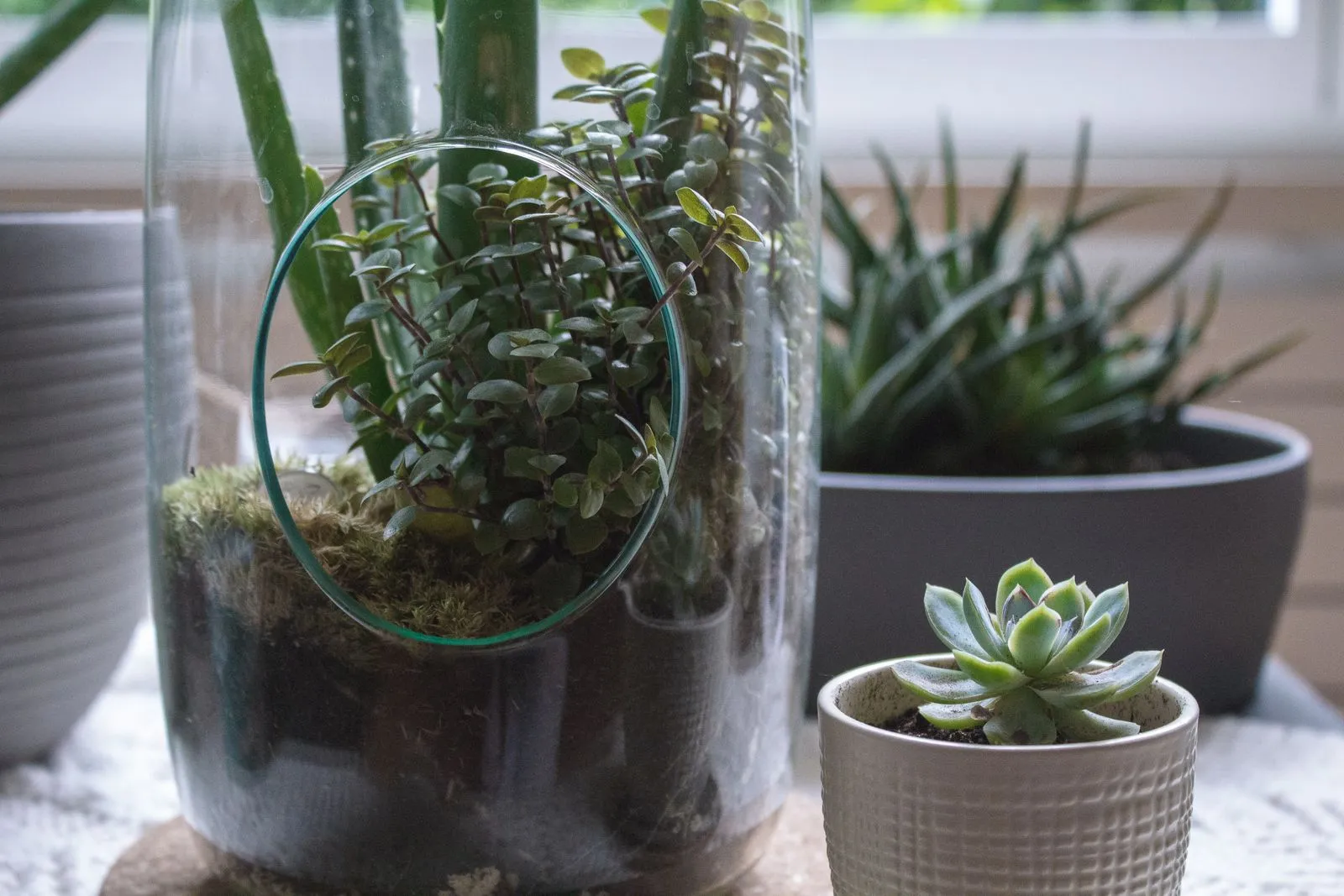
A little moisture is essential for many terrariums, but too much can encourage mold on soil, wood, or decaying leaves. The goal is not to keep a terrarium completely dry; it is to maintain a balance that suits its plants and container. With careful watering, appropriate airflow, and quick cleanup, you can limit mold without disrupting the small ecosystem. Start by checking the type of terrarium you have, since open and closed designs need different care.
Match Airflow to the Setup
Open terrariums naturally exchange air with the room, so they usually need less intervention for ventilation. Closed terrariums hold humidity and may develop condensation as conditions shift. If moisture stays heavy on the glass or mold appears, open the lid for a short period to let excess humidity escape, then check again. Avoid leaving it open so long that humidity-loving plants dry out.
Keep the container away from heating vents, direct sun, and other spots with sharp temperature changes. Heat can raise moisture levels and stress plants, while direct sun through glass can overheat the interior. Place the terrarium in bright, indirect light and observe how its plants respond. Stable conditions make it easier to manage moisture and spot a real problem.
Water Carefully
Add water in small amounts rather than soaking the soil. A spray bottle or dropper helps you direct water toward the substrate and avoid saturating leaves, moss, or decorative wood. For a closed terrarium, wait until the soil looks only slightly moist before adding more. If water is pooling at the bottom or the glass stays heavily fogged, hold off on watering and allow the excess to settle.
Use the plants and container as your guide instead of following a fixed schedule. Open terrariums often lose moisture faster than closed ones, but room conditions and plant choices also matter. Check the soil before watering, and look for signs such as wilting or persistently dry substrate. When in doubt, wait and reassess; adding more water is easy, but removing excess can be difficult.
Clean Up Early
Remove fallen leaves, dead plant parts, and leftover planting material as soon as you notice them. These items break down and can provide mold with a place to grow, especially in a damp enclosure. Use clean tweezers or a small tool to lift debris without disturbing roots. Check around the base of plants, beneath moss, and near pieces of bark or wood.
If a small patch of mold appears, carefully remove the affected debris and a little surrounding material. Clean the tool afterward, and avoid spreading spores to healthy plants. Then review the terrarium’s moisture and airflow rather than treating the patch alone. Widespread or recurring mold can signal that the setup is staying too wet or contains too much decaying material.
Build a Simple Checkup
Inspect your terrarium regularly for pooled water, persistent heavy condensation, soft or discolored leaves, and new mold growth. A quick look helps you catch changes before they spread. Keep a small note of when you water and what you observe; this can reveal whether you are adding water too often or opening a closed container more than it needs.
Keep tools clean, avoid crowding plants, and leave enough room for air to move around foliage. If the terrarium repeatedly develops mold despite careful watering and cleanup, consider whether the plants suit the container’s humidity and whether the substrate drains as intended. Small adjustments, followed by observation, are usually more useful than making several changes at once.
Preventing mold comes down to maintaining the right moisture for your plants, allowing suitable airflow, and removing decaying material promptly. Check the terrarium often, make one adjustment at a time, and give the environment a chance to respond. For help choosing plants or troubleshooting a setup, visit Moss & Vessel in Des Moines.