
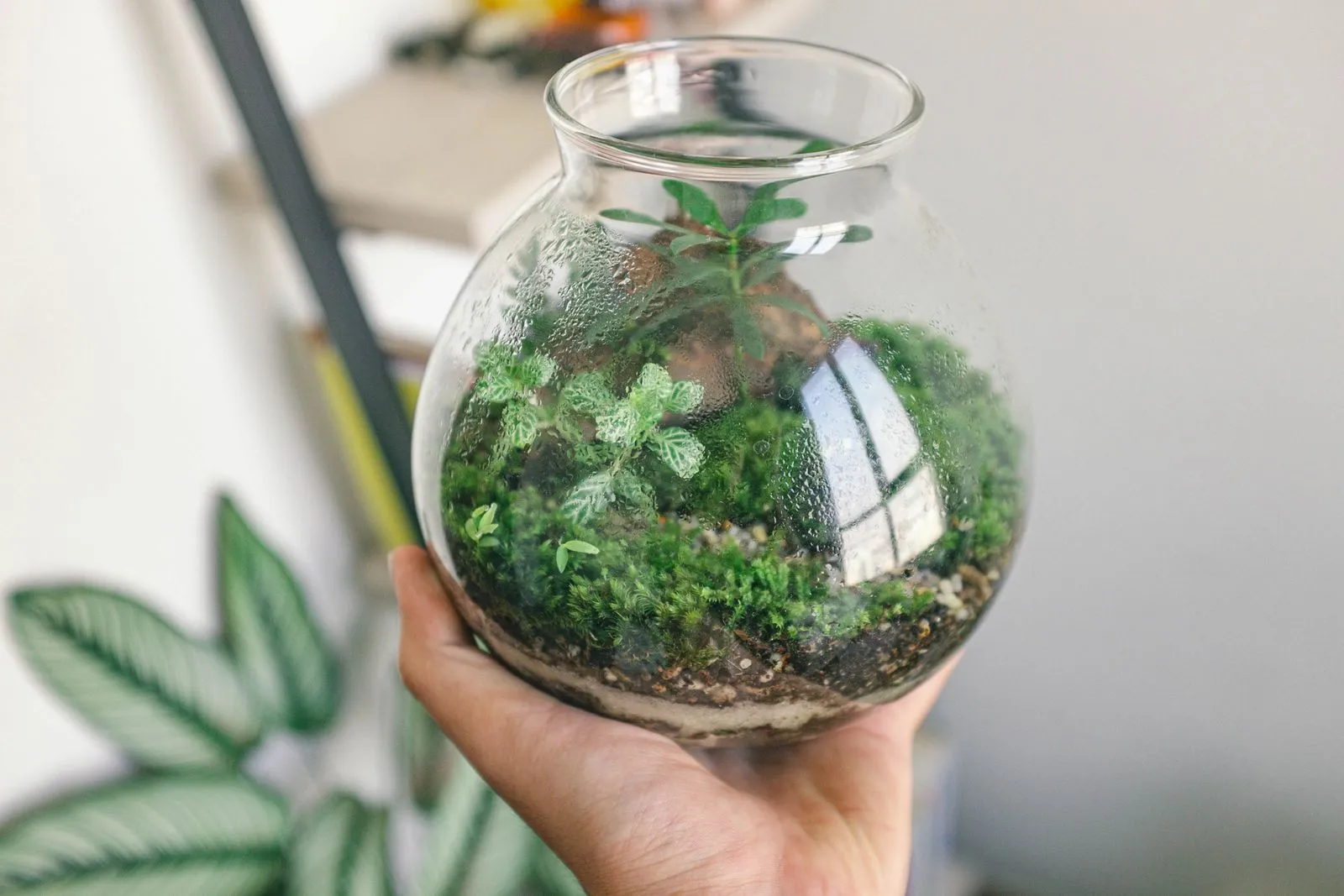
A closed terrarium creates a humid environment where moisture cycles through the container. That makes plant choice especially important: a species that enjoys damp air may still outgrow the space or struggle without enough light. Start with plants suited to warm, consistently humid conditions, then compare their mature size and growth habits. A well-matched group can share the same environment while leaving room for each plant to develop.
Choose Plants for Humidity
Look for small tropical plants that prefer steady moisture and indirect light. Fittonia, often called nerve plant, brings colorful leaves and stays relatively compact with regular trimming. Small ferns, such as button fern varieties, add fine texture, while compact peperomias can provide thicker leaves and a different shape. Check each plant’s care needs before combining it with others; similar humidity and light preferences matter more than appearance alone.
Avoid plants that need dry soil between waterings or strong direct sun. Succulents and cacti usually struggle in a closed container because high humidity and persistently damp conditions can lead to rot. Also skip plants that need substantial airflow or grow rapidly into large leaves. If a plant label gives care guidance that conflicts with a humid, enclosed setup, choose another option.
Plan for Mature Size
Shop with the container’s finished dimensions in mind, not just the plant’s size in its nursery pot. A tiny starter plant may spread quickly or grow tall enough to press against the lid. Check the species’ expected mature height and width, and leave open space around the leaves. That space helps plants retain their shape and makes it easier to remove damaged growth later.
Use one or two focal plants rather than filling every gap at planting time. Add smaller plants around them, allowing room for growth and visibility through the glass. For a narrow vessel, choose plants with an upright or restrained habit. In a wider container, you can combine low-growing plants with a modest vertical accent without crowding the view.
Pair Different Growth Habits
Create contrast by mixing leaf size, texture, and direction of growth. A compact, upright plant can sit beside a low, spreading groundcover, while a small fern adds a softer, finely divided texture. Keep plants with vigorous spreading habits toward the edge, where you can trim them before they cover neighboring leaves. Leave a clear view of the focal plant instead of allowing one species to dominate.
Avoid pairing a fast grower with a delicate plant that needs space and light. Trailing or creeping plants can cover the soil attractively, but they may also climb over nearby stems. Place them where their spread is easy to manage, and check the arrangement as it grows. If two plants repeatedly compete for the same space, prune the stronger one or remove it.
Match Light and Care Needs
Choose plants that can thrive in the same lighting conditions, usually bright, indirect light. A closed glass container can heat up in direct sun, even when the plants initially appear to enjoy the warmth. Set the terrarium near a bright window but out of harsh sun, and turn it occasionally if growth leans toward one side. If the location is dim, select suitable low-light plants rather than expecting the container to compensate.
After planting, watch for signs that the combination needs adjustment. Persistent heavy condensation, yellowing leaves, or soft stems can point to excess moisture or poor air circulation. Open the lid temporarily when the glass stays heavily fogged, and remove any decaying foliage promptly. Keep the mix modest: a few compatible plants with room to grow are easier to maintain than a crowded display.
Choose plants for shared humidity and light needs, then balance their mature sizes and growth habits. Leave room for spreading, keep fast growers manageable, and observe the terrarium after planting so you can correct crowding or excess moisture early. If you want help selecting a compatible group, visit Moss & Vessel in Des Moines.